
Gene Therapy Approaches for Treating Childhood Leukemia: Current Progress and Future Directions
Pakistan Journal of Biochemistry and Biotechnology, 7(1): 65 to 79.
Read the articleResearch
Scroll through a computational drug-discovery thesis: from target to leads to validation. Final-year thesis, University Institute of Medical Laboratory Technology, The University of Lahore (2025 to 2026).

 1 / 5
1 / 5
STEP 01 — THE TARGET
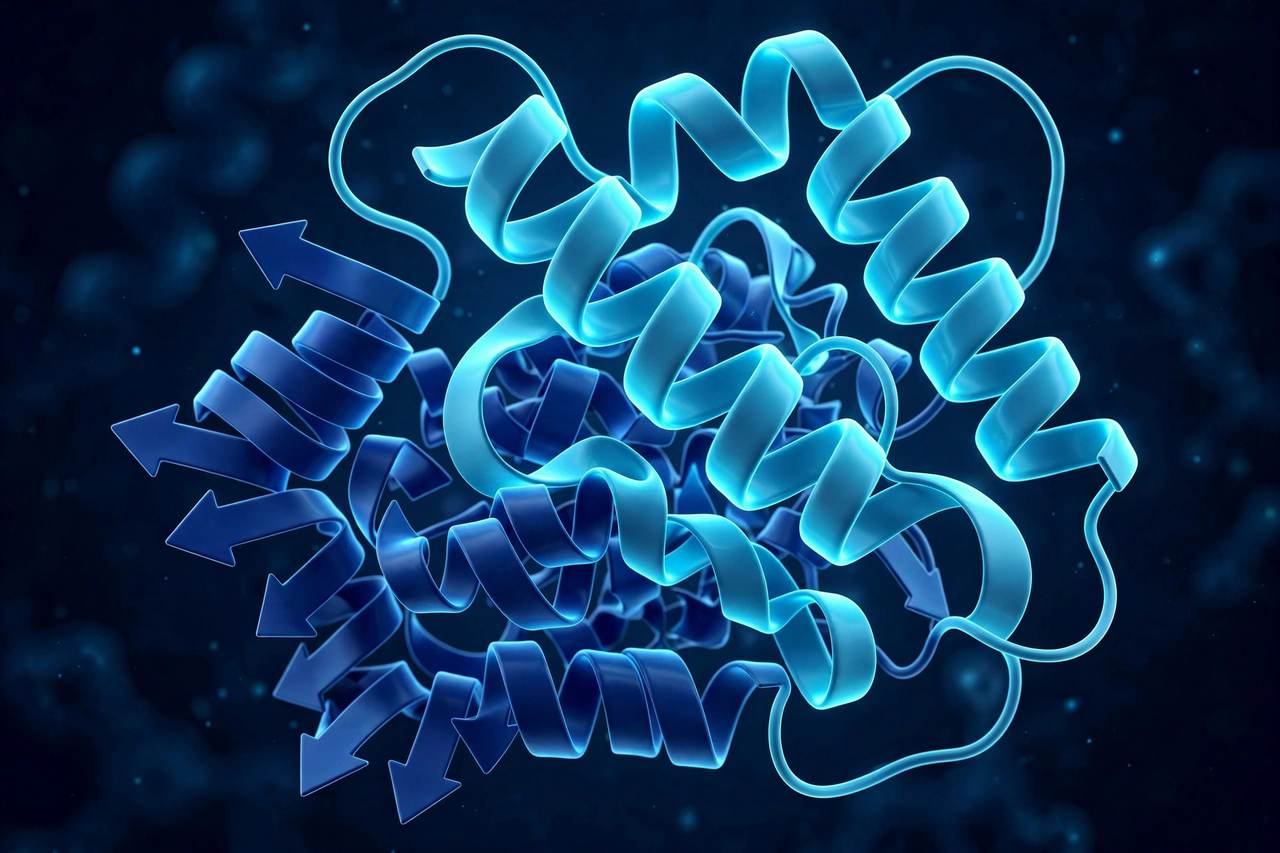
The human neurokinin-1 receptor (NK1R) is a GPCR target in stress and anxiety biology. The study aimed at its orthosteric pocket (PDB 6HLO), asking whether gut microbial postbiotic metabolites could modulate it, a gut-brain axis hypothesis.
STEP 02 — THE LIBRARY
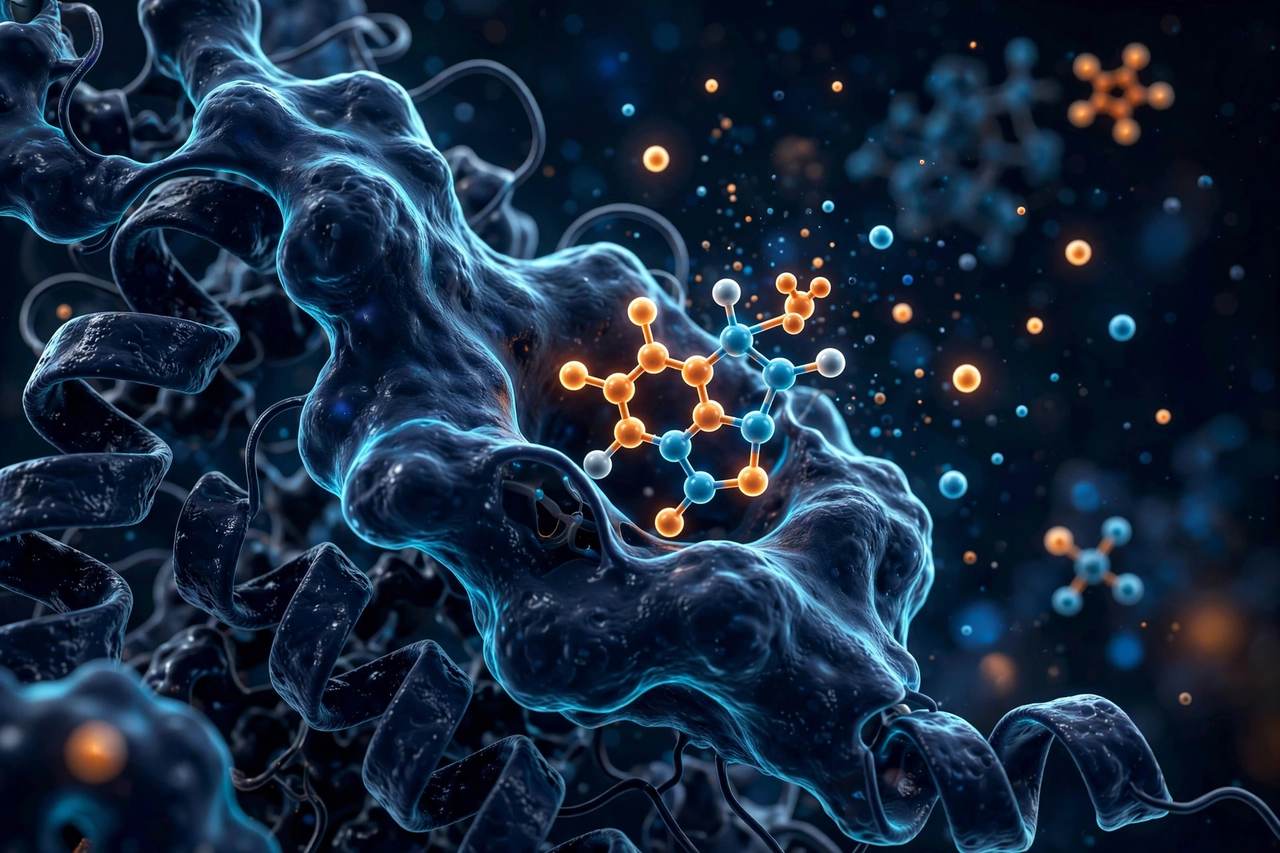
52 gut-derived metabolites plus four approved NK1R antagonists (aprepitant, fosaprepitant, rolapitant, netupitant) were docked into the pocket with AutoDock Vina. The approved drugs served as the benchmark every candidate had to beat.
STEP 03 — THE LEADS
Urolithin B and a benzofuran-2-one derivative emerged as lead computational candidates: favourable docking scores, reference-like hydrophobic contacts, predicted blood-brain barrier permeability and low predicted toxicity (SwissADME, ProTox).
STEP 04 — THE VALIDATION
Density functional theory on the reference antagonists, then 100 ns molecular dynamics simulations of three antagonist-receptor complexes with MM-PBSA and MM-GBSA free-energy estimation. Docking poses that survive dynamics earn their keep.
STEP 05 — THE MANUSCRIPT
Results prepared as a full research manuscript with structured figures and tables, formatted for journal submission. The toolkit: Vina, GROMACS, DFT, SwissADME, ProTox, pkCSM, STRING, Cytoscape.
Visual science
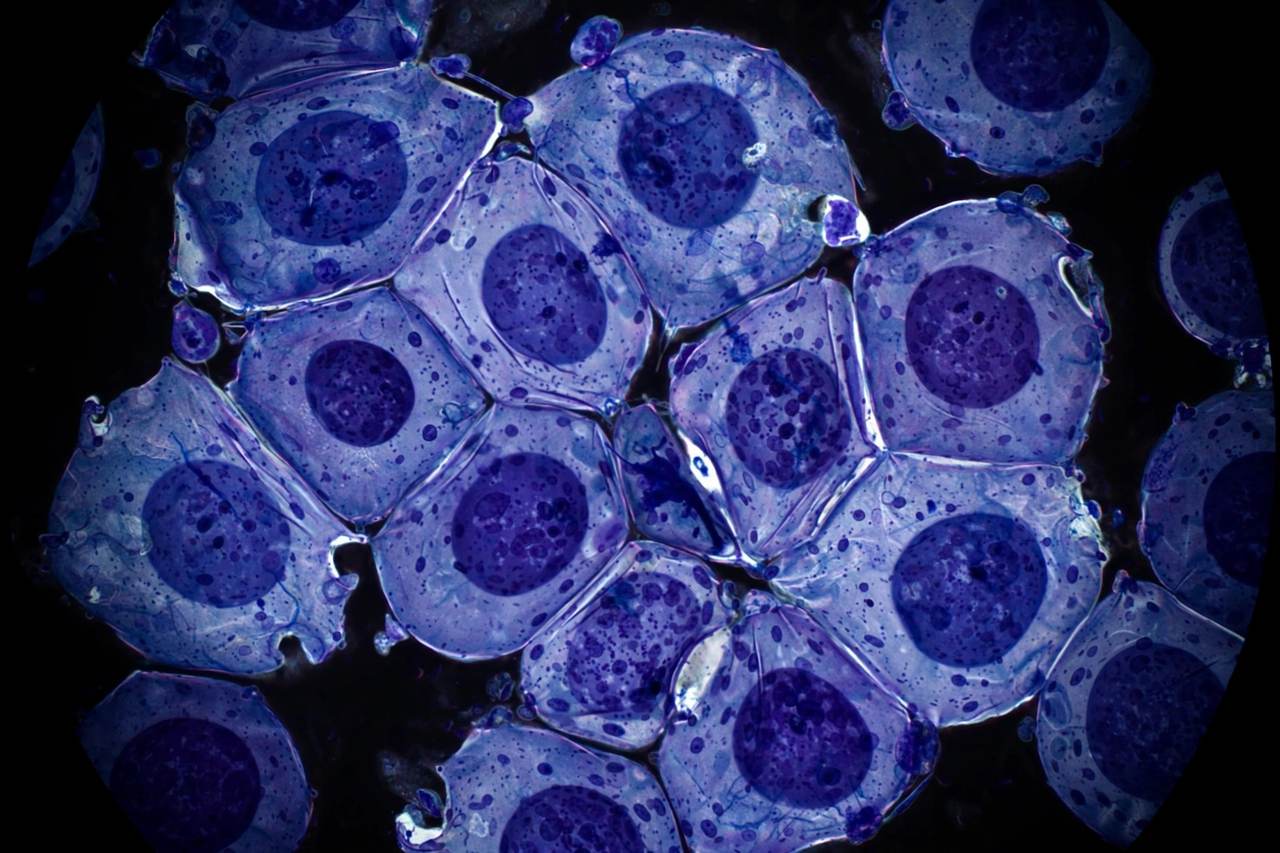
The imagery behind the work: protein structures, neural networks, cellular diagnostics and the DNA that ties them together.
Publications
Peer-reviewed work and manuscripts moving through the pipeline.
Pakistan Journal of Biochemistry and Biotechnology, 7(1): 65 to 79.
Read the articleServed as a peer reviewer for the Pakistan Journal of Biochemistry and Biotechnology, evaluating a submitted manuscript.
With co-authors M. Ishfaq, M. Shoaib and Saad Ali.
With co-authors M. Shoaib, M. Ishfaq, Saad Ali and Kainat Waheed.
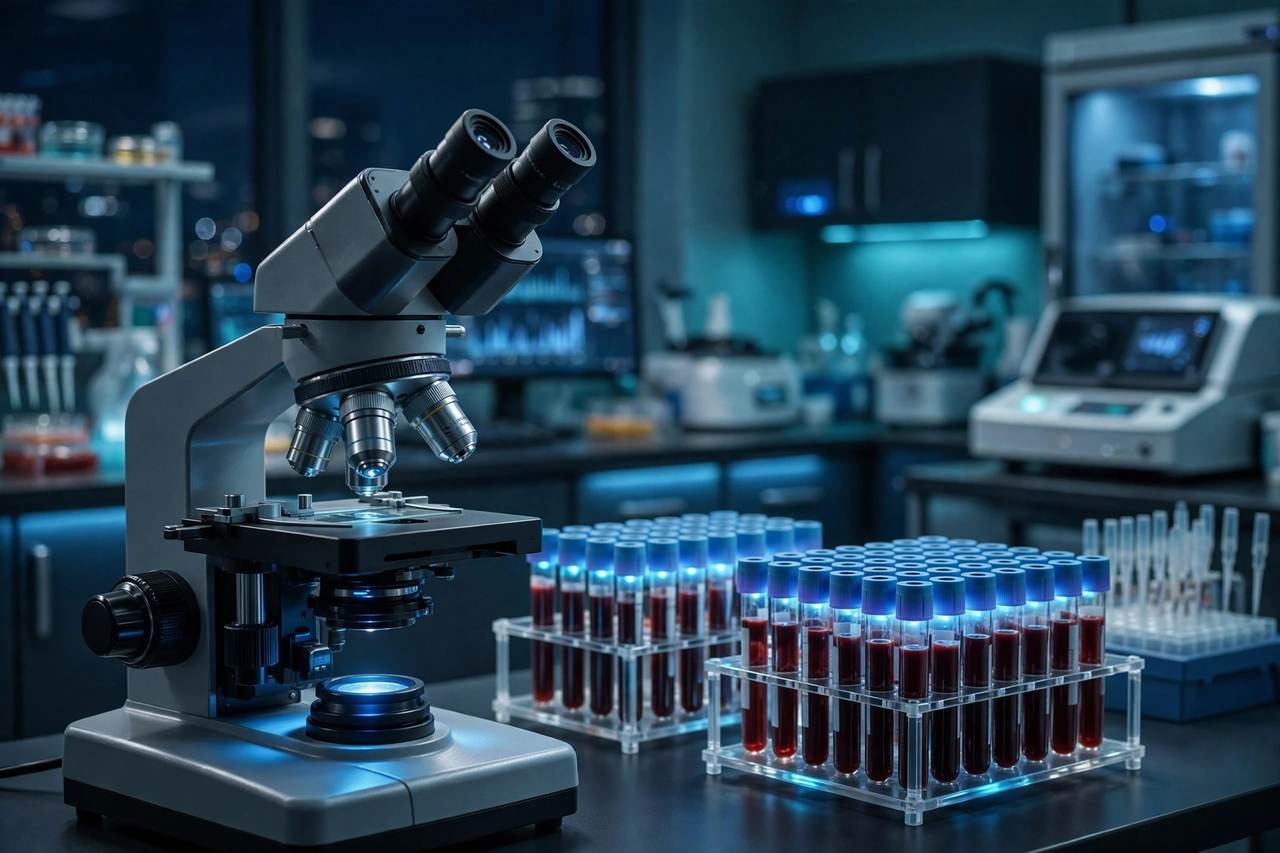
Clinical laboratory work teaches what real patient samples look like. Computational modelling explores what molecules might do. Together they keep research honest.